Note: GitHub Actions was available for GitHub Enterprise Server 2.22 as a limited beta. The beta has ended. GitHub Actions is now generally available in GitHub Enterprise Server 3.0 or later. For more information, see the GitHub Enterprise Server 3.0 release notes.
- For more information about upgrading to GitHub Enterprise Server 3.0 or later, see "Upgrading GitHub Enterprise Server."
- For more information about configuring GitHub Actions after you upgrade, see the documentation for GitHub Enterprise Server 3.0.
Note: GitHub-hosted runners are not currently supported on GitHub Enterprise Server. You can see more information about planned future support on the GitHub public roadmap.
Configuring a workflow to run manually
To run a workflow manually, the workflow must be configured to run on the workflow_dispatch event. For more information about configuring the workflow_dispatch event, see "Events that trigger workflows".
Running a workflow on GitHub
To trigger the workflow_dispatch event on GitHub, your workflow must be in the default branch. Follow these steps to manually trigger a workflow run.
Write access to the repository is required to perform these steps.
- On GitHub Enterprise Server, navigate to the main page of the repository.
- Under your repository name, click Actions.

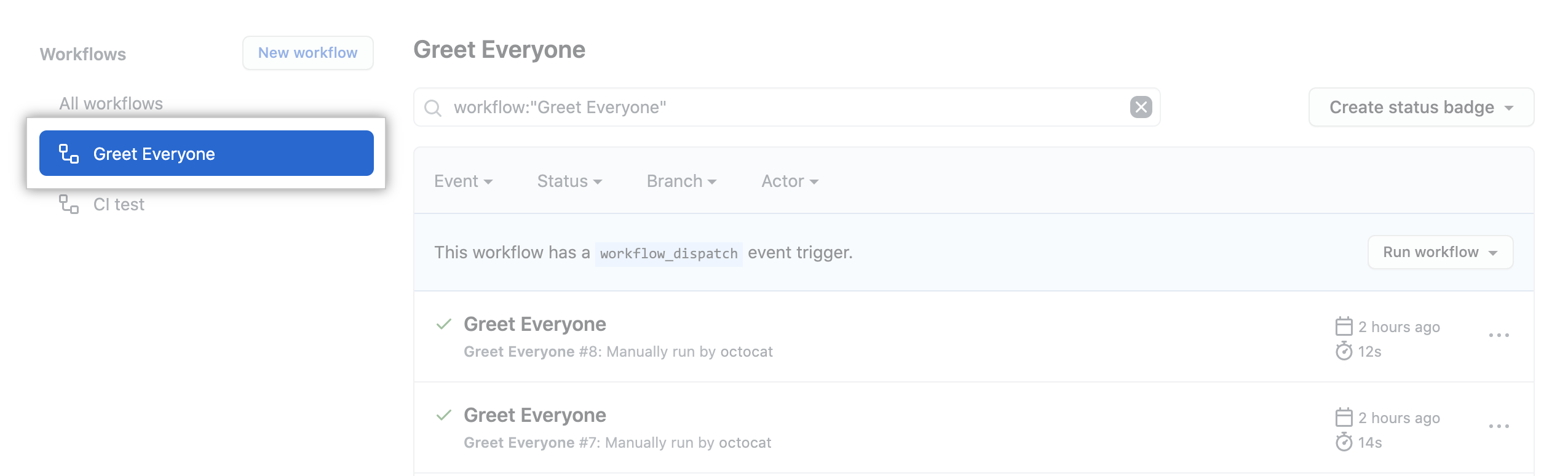
- In the left sidebar, click the workflow you want to run.
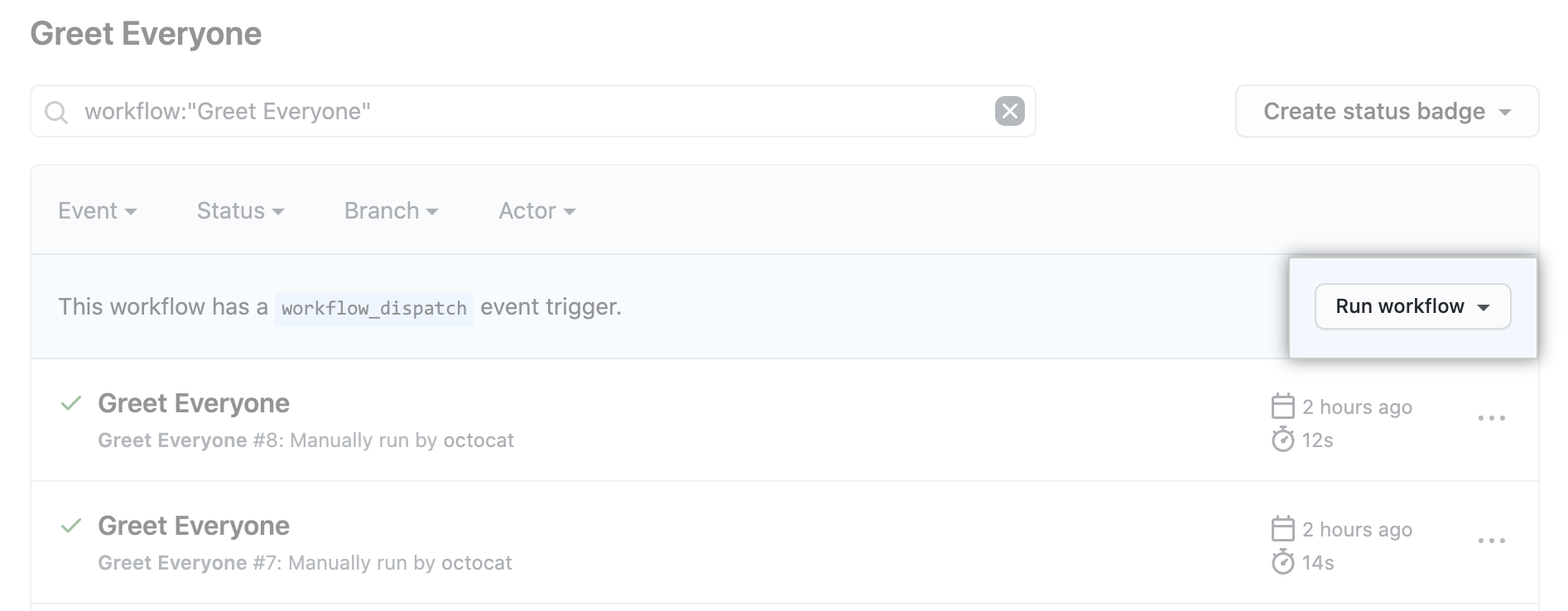
- Above the list of workflow runs, select Run workflow.
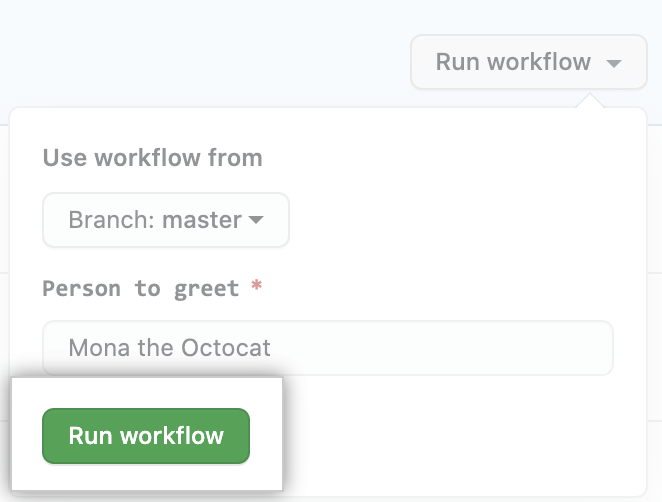
- Select the branch where the workflow will run and type the input parameters used by the workflow. Click Run workflow.
Running a workflow using GitHub CLI
For information on setting up GitHub CLI, see "Managing GitHub Actions with GitHub CLI."
To run a workflow, use the workflow run subcommand. Replace the workflow parameter with either the name, ID, or file name of the workflow you want to run. For example, "Link Checker", 1234567, or "link-check-test.yml". If you don't specify a workflow, GitHub CLI returns an interactive menu for you to choose a workflow.
gh workflow run workflowIf your workflow accepts inputs, GitHub CLI will prompt you to enter them. Alternatively, you can use -f or -F to add an input in key=value format. Use -F to read from a file.
gh workflow run greet.yml -f name=mona -f greeting=hello -F data=@myfile.txtYou can also pass inputs as JSON by using standard input.
echo '{"name":"mona", "greeting":"hello"}' | gh workflow run greet.yml --jsonTo run a workflow on a branch other than the repository's default branch, use the --ref flag.
gh workflow run workflow --ref branch-nameTo view the progress of the workflow run, use the run watch subcommand and select the run from the interactive list.
gh run watchRunning a workflow using the REST API
When using the REST API, you configure the inputs and ref as request body parameters. If the inputs are omitted, the default values defined in the workflow file are used.
For more information about using the REST API, see the "Create a workflow dispatch event."