Required co-author information
Before you can add a co-author to a commit, you must know the appropriate email to use for each co-author. For the co-author's commit to count as a contribution, you must use the email associated with their GitHub account.
If a person chooses to keep their email address private, you should use their GitHub-provided no-reply email to protect their privacy. Otherwise, the co-author's email will be available to the public in the commit message. If you want to keep your email private, you can choose to use a GitHub-provided no-reply email for Git operations and ask other co-authors to list your no-reply email in commit trailers.
For more information, see "Setting your commit email address."
Tip: You can help a co-author find their preferred email address by sharing this information:
-
To find your GitHub-provided
no-replyemail, navigate to your email settings page under "Keep my email address private." -
To find the email you used to configure Git on your computer, run
git config user.emailon the command line.
Creating co-authored commits using GitHub Desktop
You can use GitHub Desktop to create a commit with a co-author. For more information, see "Write a commit message and push your changes" and GitHub Desktop.

Creating co-authored commits on the command line
-
Colete o nome e o endereço de e-mail de cada coautor. Se uma pessoa escolher manter seu endereço de e-mail privado, você deverá usar o seu e-mail
no-replyfornecido por GitHub para proteger a sua privacidade. -
Digite sua mensagem de commit e uma descrição curta e significativa de suas alterações. Depois da descrição do commit, em vez de inserir aspas para encerrar, adicione duas linhas vazias.
$ git commit -m "Refactor usability tests.
>
>
Dica: Se estiver usando um editor de texto na linha de comando para digitar sua mensagem de commit, certifique-se de que existam duas novas linhas entre o final da sua descrição de commit e o indicador
Co-authored-by:. -
On the next line of the commit message, type
Co-authored-by: name <name@example.com>with specific information for each co-author. After the co-author information, add a closing quotation mark.If you're adding multiple co-authors, give each co-author their own line and
Co-authored-by:commit trailer.$ git commit -m "Refactor usability tests. > > Co-authored-by: name <name@example.com> Co-authored-by: another-name <another-name@example.com>"
The new commit and message will appear on GitHub the next time you push. For more information, see "Pushing changes to a remote repository."
Creating co-authored commits on GitHub
After you've made changes in a file using the web editor on GitHub, you can create a co-authored commit by adding a Co-authored-by: trailer to the commit's message.
-
Colete o nome e o endereço de e-mail de cada coautor. Se uma pessoa escolher manter seu endereço de e-mail privado, você deverá usar o seu e-mail
no-replyfornecido por GitHub para proteger a sua privacidade. -
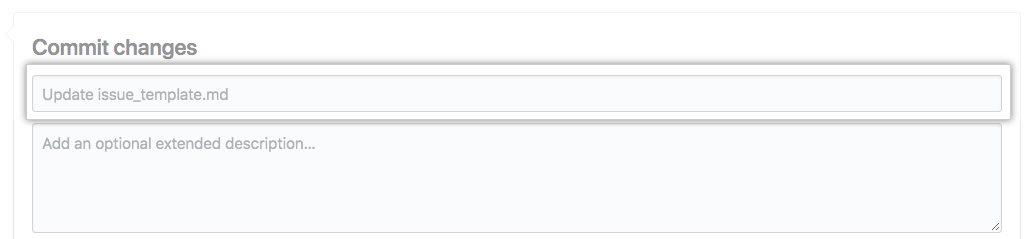
After making your changes together, at the bottom of the page, type a short, meaningful commit message that describes the changes you made.
-
In the text box below your commit message, add
Co-authored-by: name <name@example.com>with specific information for each co-author. If you're adding multiple co-authors, give each co-author their own line andCo-authored-by:commit trailer.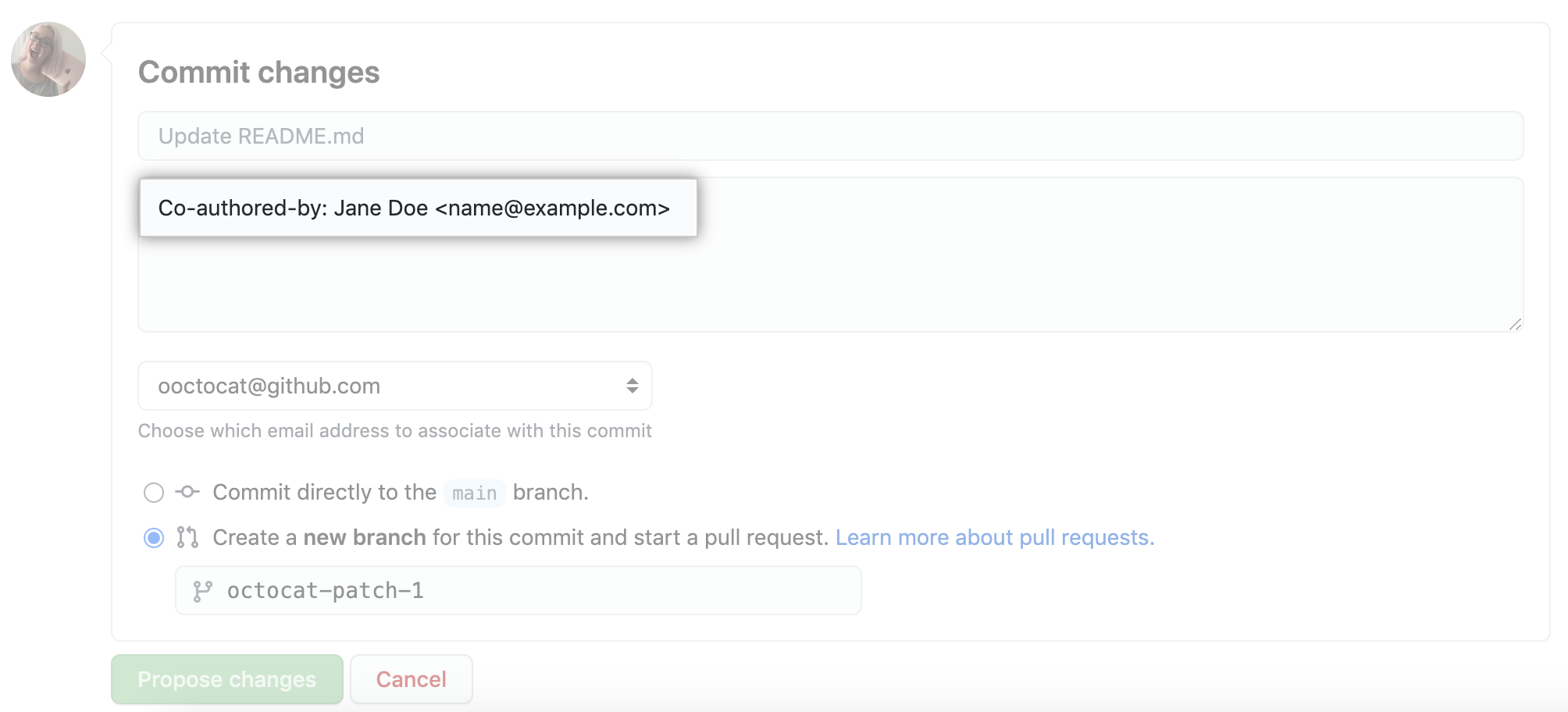
-
Click Commit changes or Propose changes.
The new commit and message will appear on GitHub.
Further reading
- "Viewing a summary of repository activity"
- "Viewing a project's contributors"
- "Changing a commit message"
- "Committing and reviewing changes to your project" in the GitHub Desktop documentation